
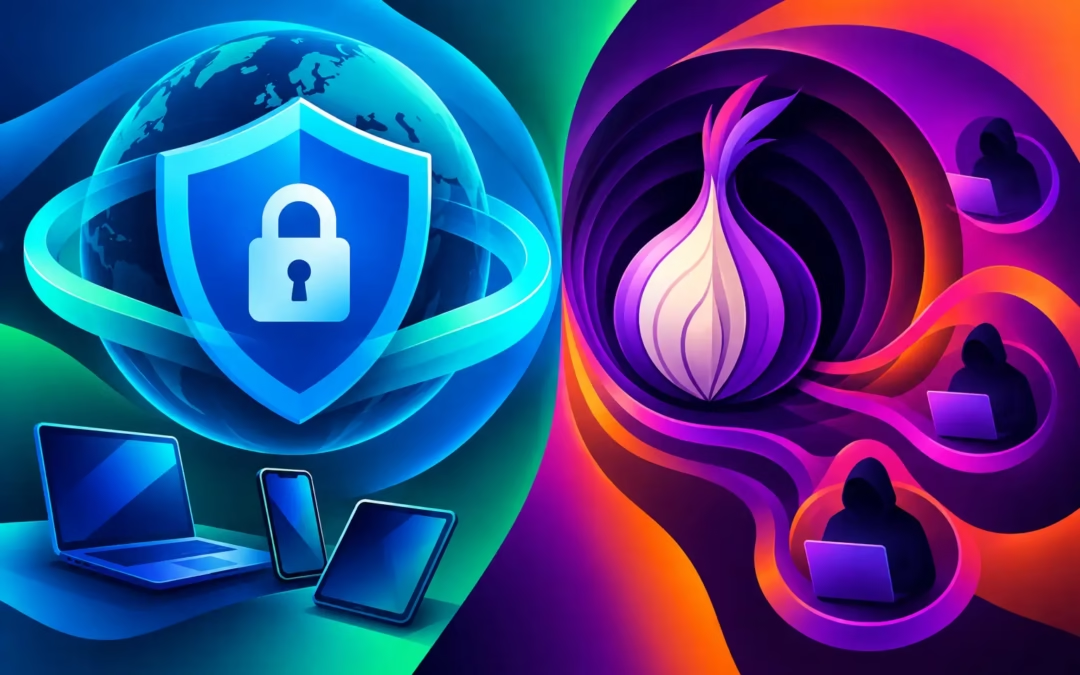
A coffee shop Wi-Fi network can look harmless until someone on the same connection starts hunting for exposed traffic. That is where the VPN versus Tor question becomes practical, not theoretical. Both tools can make it harder to trace your online activity, but they do very different jobs. Choosing the right one comes down to what you need to protect, how much speed you need, and how you use the internet every day.
A VPN is usually the smarter choice for private, secure browsing across your phone, laptop, tablet, and streaming device. Tor is designed for stronger anonymity in specific situations, but it comes with major speed and usability trade-offs. Think of a VPN as your daily digital shield and Tor as a specialized route for situations where anonymity matters more than convenience.
VPN versus Tor: The Core Difference
A virtual private network, or VPN, creates an encrypted tunnel between your device and a VPN server. Your internet provider, the owner of a public Wi-Fi network, and nearby snoops cannot easily see the contents of your traffic. Websites see the VPN server’s IP address rather than your home IP address, helping protect your location and identity.
Tor, short for The Onion Router, sends traffic through a chain of volunteer-operated servers called relays. Each relay knows only part of the route, which makes it difficult for a single observer to connect you to the website you visit. The name comes from the layers of encryption that are removed one at a time as your traffic passes through the network.
The biggest difference is trust. With a VPN, you trust one provider to handle your connection responsibly. A reputable VPN should use strong encryption, operate a clear no-log policy, and provide safety features such as a kill switch. With Tor, you spread trust across multiple relays, many run by volunteers you do not know. That can reduce reliance on one company, but it does not mean every risk disappears.
How a VPN Protects Everyday Internet Use
A VPN is built for the things most people do every day: checking bank accounts, shopping, messaging, working remotely, watching shows, and browsing on public Wi-Fi. When connected, it encrypts traffic between your device and the VPN server. This is especially useful on hotel, airport, café, and shared apartment networks, where an unprotected connection can expose more than you expect.
It also masks your IP address. Your IP can reveal an approximate location and help websites, advertisers, and trackers build a profile around your activity. A VPN replaces it with the IP address of the server you choose. Select a server in another region, and you may also be able to access content that is normally restricted by location, subject to the platform’s rules and local laws.
Speed is another reason VPNs fit normal use. Encrypting data adds some overhead, but a quality service with well-maintained server locations can still support video calls, gaming, streaming, and large downloads. Tor routes traffic through several relays, so delays are far more noticeable.
A kill switch adds another valuable layer. If the VPN connection drops unexpectedly, the kill switch blocks internet traffic until protection is restored. Without it, your device could reconnect through your regular network and reveal your real IP address for a moment. Those moments matter when privacy is the goal.
What Tor Does Well
Tor is most commonly used through the Tor Browser. It is designed to reduce tracking and fingerprinting while routing browsing traffic through the Tor network. For people researching sensitive topics, communicating under restrictive conditions, or needing stronger separation between their identity and web activity, that extra anonymity can be meaningful.
Tor also makes it harder for the website you visit to identify your original IP address. Since traffic takes multiple hops, tracing the connection is more difficult than with a standard direct connection. It can offer access to websites that may be blocked by a local network or internet provider.
But Tor works best when you treat it carefully. Logging into your usual email, social media, shopping account, or any account tied to your real identity can immediately weaken the anonymity it provides. Downloading files can create risks as well, because some files may connect to the internet outside the Tor Browser after you open them. Tor protects a route, not every choice made at the other end of it.
The Trade-Offs: Speed, Streaming, and Security
Tor is noticeably slower because your data travels through several relays before reaching a website. Pages can take longer to load, video may buffer, and many websites challenge Tor users with repeated CAPTCHA checks. Streaming services often block known Tor exit nodes, making Tor a poor choice for watching sports, movies, or live events.
A VPN is typically much better for streaming and general browsing. You can connect to a server location, keep your traffic encrypted, and use the internet with far less friction. It is also easier to protect multiple devices at once. That matters when your phone, work laptop, family tablet, and smart TV all connect to the same digital life.
Neither tool is magic. A VPN cannot protect you from giving personal information to a fake website, reusing weak passwords, or installing malware. Tor cannot make unsafe downloads safe, erase what you post publicly, or guarantee anonymity if your behavior identifies you. Real online privacy comes from combining the right tool with smart habits.
Is a VPN or Tor More Private?
The honest answer is: it depends on the threat you are facing.
If you want to stop your internet provider, public Wi-Fi owner, or local network attacker from viewing your browsing traffic, a VPN is highly practical. If you want to hide your home IP from websites and browse more privately without turning normal internet use into a chore, a VPN is usually the right fit.
If your primary concern is reducing the ability of websites or network observers to trace browsing back to you, Tor can provide stronger anonymity characteristics. However, its effectiveness relies on using it correctly and accepting slower speeds, website blocks, and a less convenient experience.
There is also a privacy distinction worth understanding. A VPN provider can potentially see connection information because it carries your traffic. That is why provider choice matters. Look for transparent no-log practices, strong 256-bit encryption, reliable servers, and a kill switch. Tor relays distribute the route, but the final exit relay may be able to see unencrypted traffic if you visit a site that does not use HTTPS. Always look for the secure padlock in your browser and avoid entering sensitive information on unencrypted sites.
Can You Use a VPN and Tor Together?
You can, but most everyday users do not need to. Connecting to a VPN before opening Tor can hide Tor use from your internet provider and prevent the first Tor relay from seeing your home IP. On the other hand, this setup adds complexity and can make an already slow connection even slower.
Running Tor through a VPN also shifts part of your trust back to the VPN provider. It may be useful in particular circumstances, but it is not automatically safer for every person or every task. If you are simply protecting your data on public Wi-Fi, watching region-available content, or browsing without exposing your home IP, a VPN alone is the cleaner solution.
Avoid using random browser extensions or unverified “Tor VPN” apps that promise total anonymity. Privacy tools should reduce exposure, not create another place for fraudsters to collect your data.
Which One Should You Choose?
Choose a VPN if you want affordable, always-on protection for daily browsing, online banking, public Wi-Fi, streaming, gaming, and multiple devices. It gives you encrypted traffic, an alternate IP address, and a practical way to take more control over your online identity without sacrificing the internet you actually want to use.
Choose Tor when anonymity is more important than speed and convenience, and you understand how to avoid linking your real identity to your activity. It is a specialized privacy tool, not a replacement for a secure everyday connection.
For most households, a dependable VPN offers the strongest balance of privacy, speed, and simplicity. Surf Smart VPN helps protect up to six devices with 256-bit encryption, a no-log approach, global server locations, and kill-switch protection, so your personal data is not left exposed when you connect.
Your online identity deserves more protection than hope. Start with the tool that fits your real habits, use secure websites, keep your devices updated, and make private browsing part of your routine rather than an afterthought.